Healthy trees bring lasting value to residential gardens, commercial properties, and public outdoor spaces. They provide shade, improve air quality, support biodiversity, and make landscapes more inviting. However, maintaining beautiful trees requires regular attention and an understanding of their natural growing needs. With suitable maintenance practices, property owners can prevent common problems and help their trees remain strong throughout changing seasons.
Proper tree care begins with regular observation. Spending time examining leaves, branches, trunks, and surrounding soil can reveal early signs of potential problems. Healthy leaves generally have a consistent appearance for their species, while unusual discoloration, premature dropping, or irregular growth may indicate environmental stress. Cracks in the trunk, damaged bark, and dead branches also deserve attention. Recognizing these changes early can make treatment more effective and reduce the possibility of extensive damage.
Providing suitable growing conditions is essential for healthy development. Trees need adequate sunlight, appropriate soil conditions, and sufficient room for their roots and branches. Planting trees too close to buildings, fences, or other large plants can create competition and future maintenance challenges. Selecting species that naturally adapt to local weather and soil conditions helps reduce unnecessary stress. Before planting, it is also important to consider underground utilities and overhead power lines.
Soil quality has a direct influence on how effectively trees absorb water and nutrients. Poor drainage, compacted ground, and nutrient deficiencies can interfere with normal root development. Organic mulch is a practical way to improve the growing environment around trees. It helps conserve soil moisture, limits weed competition, and protects roots from extreme temperatures. Wood chips and shredded bark are commonly used, but mulch should be applied without covering the trunk or root flare.
Watering practices should reflect the age and condition of each tree. Newly planted trees require consistent moisture while their roots become established. Older trees are generally more resilient, although prolonged dry weather can still affect their health. Deep watering allows moisture to reach the root zone and encourages stronger root development. Checking the soil before adding more water helps prevent excessive moisture, which can contribute to root damage and certain diseases.
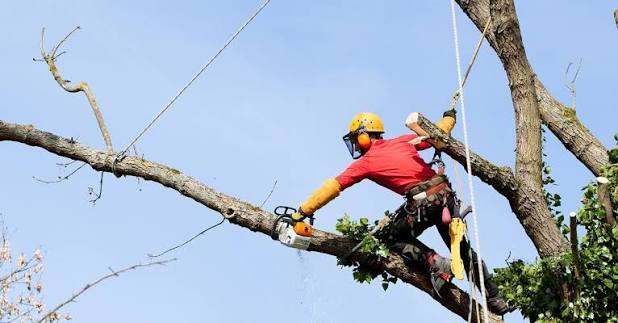
Maintaining a healthy branch structure is another important responsibility. Trees naturally develop branches that may eventually become damaged, crowded, or poorly positioned. Selective pruning can improve canopy structure, remove hazardous limbs, and support healthy growth. Dead or broken branches should be evaluated promptly, particularly when they hang over walkways, vehicles, or buildings. Because incorrect pruning can create lasting damage, larger projects are best handled by trained tree care professionals.
Pest and disease prevention should also be part of routine maintenance. Insects can weaken trees by feeding on foliage, damaging bark, or affecting internal tissues. Diseases may develop through fungal infections, bacteria, or unfavorable growing conditions. Common warning signs include unusual spots on leaves, discolored bark, premature leaf loss, and declining branch growth. Identifying the cause of these symptoms is important before choosing a treatment. Applying random pesticides or fertilizers without understanding the problem may create additional difficulties.
Seasonal maintenance helps property owners respond to changing environmental conditions. Spring is a good time to inspect new growth and identify branches damaged during winter. Summer maintenance focuses on moisture management and monitoring heat stress. During autumn, trees can be inspected for structural concerns while the surrounding landscape is cleaned. Winter provides another opportunity to examine branch structure and prepare for future growing seasons.
Professional tree care services are useful when dealing with mature trees, difficult pruning jobs, and unexpected storm damage. Certified arborists can assess overall tree health, identify structural weaknesses, recommend appropriate treatments, and determine whether removal is necessary. Professional inspections are particularly valuable for trees located near homes, commercial buildings, roads, and electrical infrastructure.
A healthy landscape depends on consistent care rather than occasional maintenance. By protecting root systems, improving soil conditions, watering appropriately, and monitoring potential problems, property owners can support stronger tree growth. Responsible maintenance preserves the natural beauty of outdoor spaces while ensuring that trees continue providing environmental and practical benefits for future generations.
Leave a Reply